
The Polytechnic University of Valencia (UPV) is developing two innovative tools to measure the footprint of conference tourism in Valencia: an entropy calculator (negative impact) and a legacy calculator (positive impact), which will allow progress towards a more efficient governance of MICE tourism (Meetings, Incentives, Conferences and Exhibitions).
This innovation is part of the European Zentropy MICE project, whose ultimate goal is for MICE tourism to become an engine of well-being for citizens, with reduced negative impacts and a greater social and economic legacy. Valencia is the third Spanish city for MICE tourism, with more than half a million visitors of this type expected by 2025.
The Zentropy MICE model
The Polytechnic University of Valencia is participating in the Zentropy MICE project together with the Valencia City Council, València Innovation Capital, the Visit Valencia Foundation, the consultancy Khora Urban Thinkers and the Valencia Conference Centre, which hosts more than a third of the events held in the city and will act as a testing laboratory for the innovations.
Based on the analysis of activity at the Valencia Conference Centre, the Zentropy MICE project will develop a specific methodology to measure urban entropy and design concrete actions in areas such as energy efficiency, sustainable mobility, waste management, use of materials and knowledge transfer.
These actions will be tested in three pilot conferences, allowing for a comparison of conferences before and after their implementation and an evaluation of their effectiveness.
Reduce the pressure on resources
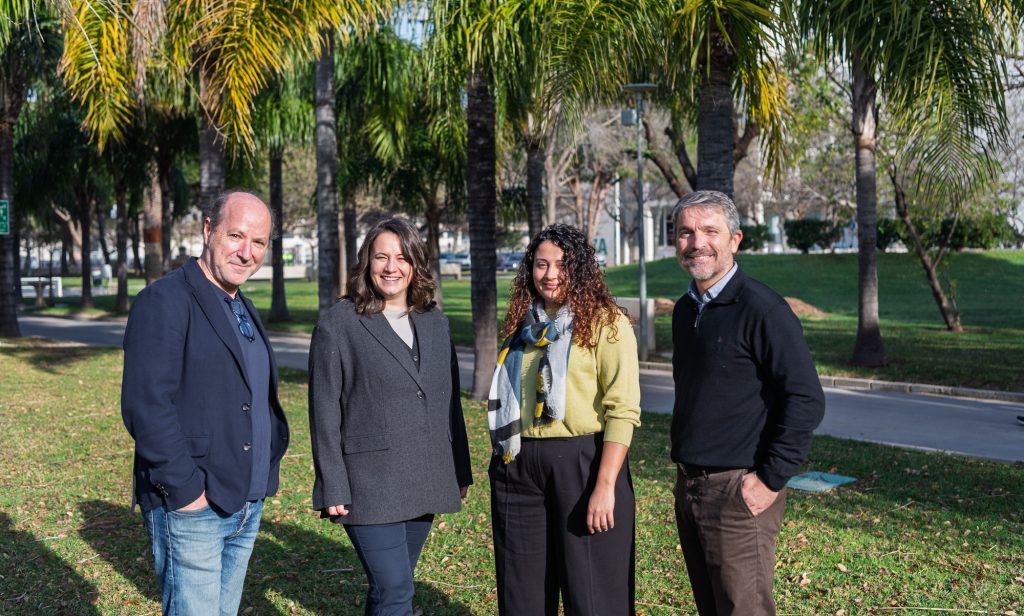
Tomás Gómez Navarro, from the Institute of Energy Engineering, and José Miguel Carot, from the Department of Applied Statistics and Operations Research and Quality, lead the teams from the Universitat Politècnica de València that participate in the Zentropy MICE project.
As José Miguel Carot explains, ‘The Zentropy MICE project proposes a systemic approach based on the concept of entropy, understood as the degree of disorder that occurs in a system when energy, matter, and information circulate. This framework allows us to measure resource consumption, identify inefficiencies, and transform conferences into catalysts for sustainability, social cohesion, and urban innovation.’
‘The project seeks to keep urban entropy as low as possible, while promoting innovation, knowledge and the reputation of the city,’ says UPV professor Tomás Gómez Navarro.
Every MICE event generates two experiences: the experience of the meeting itself and that of urban tourism, which materializes during leisure time. ‘Analyzing both dimensions together will allow us to understand the real impact of the sector on Valencia and to design more effective strategies to make it sustainable,’ says Iuliia Rytck, a researcher at the Polytechnic University of Valencia.
Initial results
Before the first official Zentropy MICE project congress, scheduled for mid-2026, the calculator is being validated at congresses organized at the UPV to check its operation under real conditions.
Its first application, at an architecture congress, has allowed us to understand the profile and behavior of its participants, providing a first approximation of their tourist experience in the city.
Thus, a clearly international profile is revealed (73.3% of attendees) with high tourist activity: about 75% went on tourism and approximately half extended their stay beyond the days of the event, although only 28% traveled with a companion.
80% visited emblematic spaces of the city, such as the historic center, Malvarrosa beach or the City of Arts and Sciences, while only a small part explored other spaces of high tourist interest, such as the Botanical Garden, l’Albufera or the Bioparc.
In terms of transportation, 85% attended the congress by public transport or on foot, and this trend continued during leisure time, with increased use of bicycles, although 20% also used cars or taxis. Furthermore, 90% opted for local restaurants—preferring fish, seafood, or poultry over red meat—and around 60% made purchases, mainly souvenirs and locally sourced food products.
Transfer to other European cities
The tool for calculating the legacy of tourism assesses how much tourist visits contribute to the international reputation of Valencia and its local economy, in addition to quantifying aspects that are less tangible a priori, such as the generation and exchange of knowledge, the contribution to the solution of urban social challenges, the social revitalization of activities in neighborhoods and, in general, the degree of alignment between the activities they carry out —including their leisure time— and the tourism development and urban transformation strategies of the city of Valencia.
Thanks to their contributions, the Zentropy MICE project will improve the governance of the tourism sector and boost its digital transition, with the development of new quantitative and digital tools to assess impact, monitor resources and plan events in a smarter and more transparent way.
The model proposed by Zentropy MICE is extrapolatable and replicable to other European urban contexts, with transfer cities such as Ljubljana (Slovenia), Heidelberg (Germany) and Larissa (Greece), which will validate this methodology in different types of events.
The Zentropy MICE project has a duration of three and a half years (ending in May 2028), and has an approximate budget of 5.2 million euros, financed 80% by the European Regional Development Fund (ERDF) through the European Urban Initiative (EUI).