
What makes a conference truly valuable? Is it the program, the networking opportunities, or the number of attendees?
For Zentropy MICE, the answer goes further. The European project is exploring how conferences can generate lasting social, economic and environmental benefits for both participants and host cities. To achieve this, understanding the experiences, expectations and behaviours of attendees is essential.
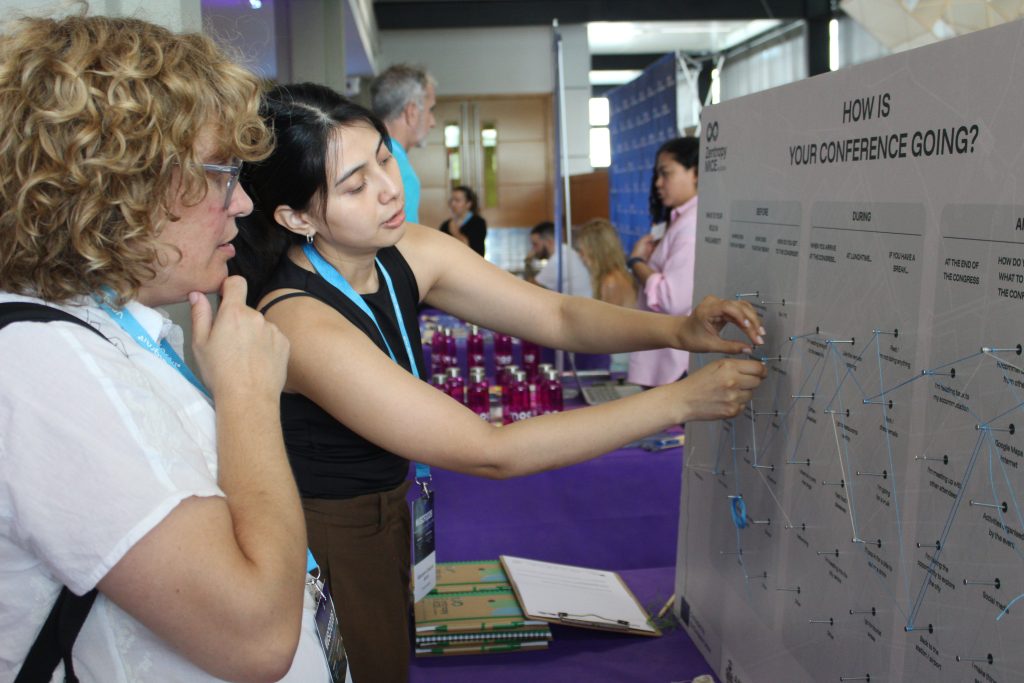
As part of this work, Zentropy MICE recently conducted a series of participatory activities during two Zero Congresses held in Valencia: the I International Symposium on Pathophysiology in Cardiometabolic Diseases, hosted at Las Naves, and the ValgrAI Scientific Council Forum 2026 at the Universitat Politècnica de València.
The activities aimed to better understand how people experience conferences and how events can strengthen their connection with the destination.
Listening to people to transform events
Creating more sustainable and impactful conferences starts with understanding the people who attend them.
For this reason, Zentropy MICE places participants at the heart of its research, gathering insights that can help shape a new generation of MICE events where sustainability, participant satisfaction and urban legacy go hand in hand.
Through a series of interactive exercises, attendees shared their priorities, motivations and expectations, providing valuable information about what they seek from an event and how they engage with the host destination.
Khora Urban Thinkers leads the participatory process
The activities were designed and facilitated by Khora Urban Thinkers, a Zentropy MICE partner specialising in participatory methodologies, urban innovation and human-centred approaches.
Drawing on its experience in stakeholder engagement and collaborative processes, Khora created an open and inclusive environment where participants could actively share their perspectives and contribute to the project’s research.
The goal was straightforward: generate practical knowledge that can improve both conference experiences and their contribution to local communities.
What do conference participants really value?
The first exercise focused on identifying the elements attendees value most in a conference experience.
Participants explored a range of sustainability, circularity and legacy initiatives, highlighting those they considered most relevant and attractive.
The activity provided valuable insights into the benefits people expect from professional events and revealed opportunities to align sustainability initiatives with attendee interests, increasing both engagement and long-term impact.
From the participant journey to urban legacy
The second exercise examined the participant journey before, during and after the event.
Attendees, speakers and moderators mapped how they travel to conferences, move around the city, interact with venues and spend their time beyond the official program.
This collective mapping exercise helped identify key behavioural patterns and critical touchpoints throughout the event experience. It also revealed opportunities to improve attendee satisfaction while strengthening the relationship between conferences and their host destinations.
Importantly, the findings offer a deeper understanding of how visitors engage with Valencia beyond the conference venue, helping identify ways events can contribute more effectively to the city’s social, economic and environmental objectives.
Designing conferences that create lasting value
The knowledge gathered through these participatory activities will support the development of conferences that are more sustainable, more connected to their destinations and better equipped to create meaningful long-term benefits.
For Zentropy MICE, the success of a conference should not be measured solely through attendance figures or economic performance. It should also be evaluated through the value it creates for people, communities and places.
By combining participatory methodologies, urban innovation and evidence-based decision-making, Zentropy MICE is helping shape a future where sustainable MICE events generate not only successful experiences, but also lasting urban legacy.